What Are The Pool Laws in CA?
California’s swimming pool regulations are comprehensive and designed to ensure safety, conservation, and compliance with building codes. These pool laws apply to residential and commercial pools, with specific requirements varying by local jurisdiction.
Safety Requirements for New Swimming Pools in California
The California Swimming Pool Safety Act is the cornerstone of pool safety legislation in the state. This law requires that all new or remodeled pools include at least two of the following seven safety features:
- An enclosure that isolates the pool from the home
- Removable mesh pool fencing meeting ASTM standards
- An approved safety pool cover
- Exit alarms on doors providing access to the pool
- Self-closing, self-latching devices on doors accessing the pool
- Swimming pool alarms detecting unauthorized water entry
- Other protection deemed equivalent by local building officials
The enclosure requirements are stringent. Pool barriers must be at least 5 feet tall, with no gaps or openings allowing a 4-inch sphere to pass through. Gates must open outward, away from the pool, and be self-closing and self-latching. The latching device must be at least 54 inches above the ground.
Drowning Prevention
California has implemented several laws specifically aimed at preventing drowning incidents. The California Health and Safety Code requires that any home with a swimming pool intended for private use must have a drowning prevention safety feature if the construction permit was issued after January 1, 2007.
Additionally, all public pools must have marked depth levels, “no diving” warnings where appropriate, and safety equipment, including life rings and reaching poles. Public pool operators must also complete state-approved pool safety training.
Water Conservation Measures
In response to California’s recurring drought conditions, the state has enacted regulations affecting pool maintenance and construction:
- All new pools and spas must have covers to reduce evaporation when not in use
- Restrictions on draining and refilling pools during drought conditions
- Requirements for efficient pool pumps and filtration systems
- Limitations on backwashing frequency
- Rules regarding disposal of pool water (typically cannot be drained to storm sewers)
Variable-speed or dual-speed pumps are now mandatory for new pool construction or pump replacements, as they use significantly less energy than single-speed pumps.
Building Permits and Construction Requirements
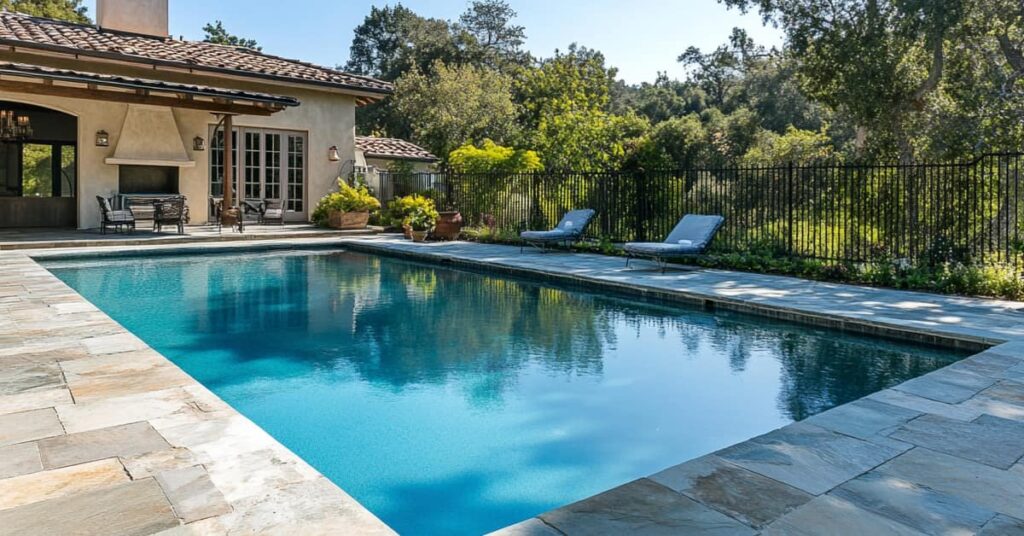
Before constructing a pool in California, homeowners must obtain proper permits. Requirements typically include:
- Detailed plans showing pool location, dimensions, and distances from property lines
- Electrical plans for lighting, pumps, and other equipment
- Plumbing plans showing water supply and drainage systems
- Structural engineering calculations for certain types of pools
- Soil reports for hillside properties or areas with soil stability concerns
Most jurisdictions require pools to be set back a minimum distance from property lines, typically between 5 and 10 feet. Additional setbacks may apply for pools near slopes, retaining walls, or structures.
Electrical Safety
California follows the National Electrical Code (NEC) requirements for pool installations. Key electrical safety requirements include:
- All electrical equipment must be grounded and bonded
- GFCI (Ground Fault Circuit Interrupter) protection for all outlets within 20 feet of the pool
- Specific requirements for underwater lighting
- Minimum distances between electrical wires and pool edges
- Prohibition of electrical devices near the pool
A licensed electrical contractor must perform all electrical work and inspect before the pool can be used.
Sanitation and Water Quality
Both public and private pools must maintain proper water quality. For public pools, regular testing and documentation are required. Specific requirements include:
- Maintaining proper chlorine levels (typically 1.0-3.0 ppm for residential pools)
- Keeping pH between 7.2 and 7.8
- Regular testing and adjustment of alkalinity and calcium hardness
- Requirements for filtration and circulation systems
Public pool laws require permits from the local health department and are subject to regular inspections.
ADA Compliance
The Americans with Disabilities Act (ADA) applies to public pools in California. These facilities must provide accessible entry and exit, such as lifts, sloped entries, or transfer walls. Specific requirements depend on the pool size and type.
Local Variations
It’s important to note that many California cities and counties have additional pool laws and requirements beyond state law. For example:
- Some jurisdictions require higher fencing or additional safety features
- Noise ordinances may restrict pool equipment operation during certain hours
- Some areas have specific requirements for pool lighting to reduce light pollution
- Homeowners associations may have aesthetic guidelines affecting pool design
Always check with your local building department and HOA (if applicable) before planning pool construction.
Pool Service Providers
California requires pool service contractors to be licensed by the Contractors State License Board. This applies to builders as well as maintenance providers. Always verify that your pool contractor holds a valid C-53 Swimming Pool Contractor license.
Insurance Considerations
While not a legal requirement, most home insurance policies in California have specific provisions regarding swimming pools. Many insurers consider pools an “attractive nuisance” and may require additional liability coverage. Some may mandate specific safety features beyond what state law requires.
Recent Legislative Changes
California continually updates its pool safety laws. Recent changes include:
- Enhanced requirements for suction outlet covers to prevent entrapment
- Stricter water conservation measures during drought periods
- Updated energy efficiency standards for pool equipment
- Increased penalties for non-compliance with safety regulations
Enforcement and Penalties
Non-compliance with California pool laws and regulations can result in significant penalties. These may include:
- Fines ranging from hundreds to thousands of dollars
- Stop-work orders for construction projects
- Requirements to remove or modify non-compliant features
- Liability issues in case of accidents
Local building departments enforce most pool regulations, while health departments oversee water quality and sanitation requirements for public pools.
Making a Splash: Navigating California’s Pool Regulations
Understanding and complying with California’s pool laws and regulations ensures legal compliance and the safety and enjoyment of your aquatic investment. For expert guidance on navigating these requirements and creating your dream pool that meets all state and local standards, contact Majestic Pool Construction.
Serving Southern California with distinction, our team of licensed professionals can help you design and build a beautiful, compliant swimming pool tailored to your specific needs and property. Reach out today to begin your journey toward the perfect California pool experience.